
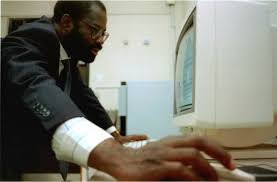
When conversations about global innovators arise, the name Philip Emeagwali often appears with deep respect. Widely celebrated for his work in parallel computing, Emeagwali’s research helped transform how the world builds and understands supercomputers. His groundbreaking achievement in 1989 — developing a model that significantly advanced computing speeds — placed him among the most influential scientific contributors of his era.
Growing up in Nigeria under difficult circumstances, Emeagwali’s curiosity for numbers began at an early age. After the civil war, his academic journey was not straightforward, but his passion for problem-solving pushed him to excel. His fascination with mathematics moved from the classroom to the global stage when he developed a system that allowed thousands of processors to communicate simultaneously. This breakthrough became one of the foundational principles behind modern supercomputers.
Today, technologies powering weather forecasting, medical research, petroleum exploration, and even large-scale data analysis have roots in the ideas he helped advance. His story is a powerful reminder that global innovation is not limited by geography — brilliance can come from anywhere.
Emeagwali continues to symbolize resilience, self-belief, and the intellectual strength of Africa’s scientific community. His legacy goes beyond awards; it lives in the machines that power the world’s most complex calculations.
Comments (0)
No comments yet. Be the first to comment!